
Let me describe a morning I hear about constantly. Up before seven, two breakfasts made and one of them rejected, a PE kit located under a bed, shoes on, coat on, coat off again, out of the door at 8:25 for a gate that shuts at 8:40. Somewhere in that sequence the adult in charge has eaten half a slice of toast standing up and has not had a glass of water. And when I ask about supplements, the answer is usually the same: “I bought them. They are in the cupboard. I take them when I remember, which is not often.”
This is not a motivation problem and it is definitely not a caring-enough problem. It is a window problem. Between the alarm and the school gates there is no spare minute for a routine that needs thinking about, and by the time the day quietens down the morning has been written off. So instead of trying to squeeze your nutrition into the busiest forty minutes of the day, I would move it, shrink it, and attach it to something that happens whether the morning goes well or badly. Here is the checklist I actually give people.
1. Stop aiming at the school-run window
The instinct is to do everything before you leave: shake, tablets, water, vitamins, all of it. But that window is the least protected part of your day — it is interrupted by other people, and other people do not follow your plan. A routine that needs a calm kitchen will fail on the mornings a shoe goes missing, which is most of them.
Pick a moment that belongs to you instead. For parents of school-age children that is often the drive or walk back, or the first two minutes after you get in the door and put the kettle on. For anyone doing nursery drop-off and then work, it may be sitting down at your desk. For a parent at home with a toddler, honestly, it might be nap time. There is no prize for doing it at seven in the morning.
2. Make it one step, not four
The number of separate actions is what decides whether a routine survives a chaotic week. Four bottles means four small decisions and a bit of counting, and a stressful morning will quietly lose at least two of them. One step survives where four do not.
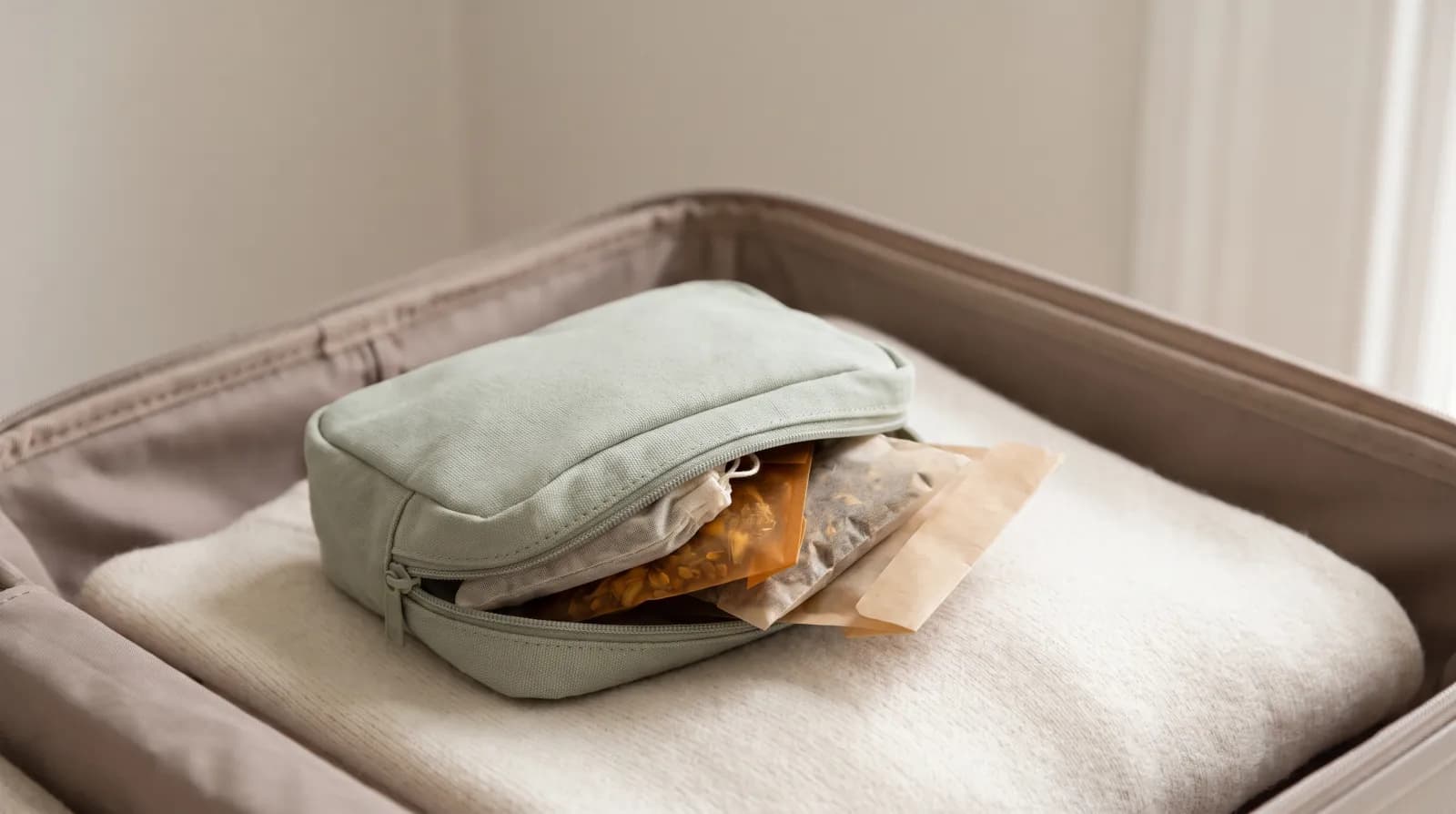
This is the practical reason I keep pointing parents towards Bioniq GO. It is a personalised daily formula built from your own answers, and it arrives as a single sachet of Swiss granules rather than a row of tablets — up to 23 science-backed nutrients in one daily dose, no pills to swallow, and vegan-friendly. Tear, tip into water, done. On the mornings when you are already behind, that difference between one action and four is the whole thing.
3. Set it up in the gaps, not in a dedicated slot
Nobody with small children has a free half hour to research supplements, so do not plan for one. The starting point is a short questionnaire about how you live, eat, sleep and move, and it fits into the time you are already sitting in the car outside a swimming lesson. You can take the free Wellness Assessment from your phone — no blood test needed — and your answers are matched to one of 40 formulas rather than leaving you to guess which of a dozen bottles you might need.
4. Use the anchors your family already gives you
Family life is repetitive, and repetition is exactly what a habit needs. You already do certain things at the same point every single day, including Sundays, and those are far more reliable than a phone alarm that will go off while you are buttering bread.
- Putting the kettle on after drop-off. Probably the strongest anchor in a British household. You are standing still for ninety seconds with your hands free.
- Making up the children’s water bottles. You are already at the tap with a glass within reach.
- The first sit-down after the school run. Predictable, in one place, and genuinely yours.
- Bedtime routine, downstairs stage. If your mornings are unpredictable but your evenings follow a script, be honest and use the evening.
Choose one anchor, not three. A routine with three possible moments has no moment at all, because each one can be deferred to the next. If you want to go further into building that single moment properly, I have written about a morning routine you will actually keep.
5. Plan for the weeks that go sideways
Half-term, a poorly child, an unexpected week of solo parenting — these will interrupt things, and that is fine. What matters is that the interruption costs you a few days rather than a few months. Keep the sachets somewhere you pass anyway, so the routine is visible without being nagged, and treat a missed day as a missed day. Nothing needs making up.
What this is not
None of this replaces feeding yourself properly, and I would not want anyone reading it that way. Food supplements are not a substitute for a varied, balanced diet and a healthy lifestyle. A personalised daily formula can support goals such as everyday energy and focus, normal skin, hair and nails, and long-term wellbeing as part of a balanced diet and active lifestyle — it works alongside meals, not instead of them. If breakfast is the thing that keeps getting skipped on the way out of the door, that is a separate and very fixable problem, and our programmes are worth a look for something quick you can actually hold in one hand.
One last note, because people ask: Bioniq was founded in London in 2019, and its personalised nutrition business is now part of Herbalife, which is why I am able to talk about both in the same breath.
If your own nutrition has been the thing that quietly drops off the list every term, start with the questionnaire rather than the cupboard — you can build your personalised formula in the time it takes for the kettle to boil, and have one step to keep instead of four to forget.