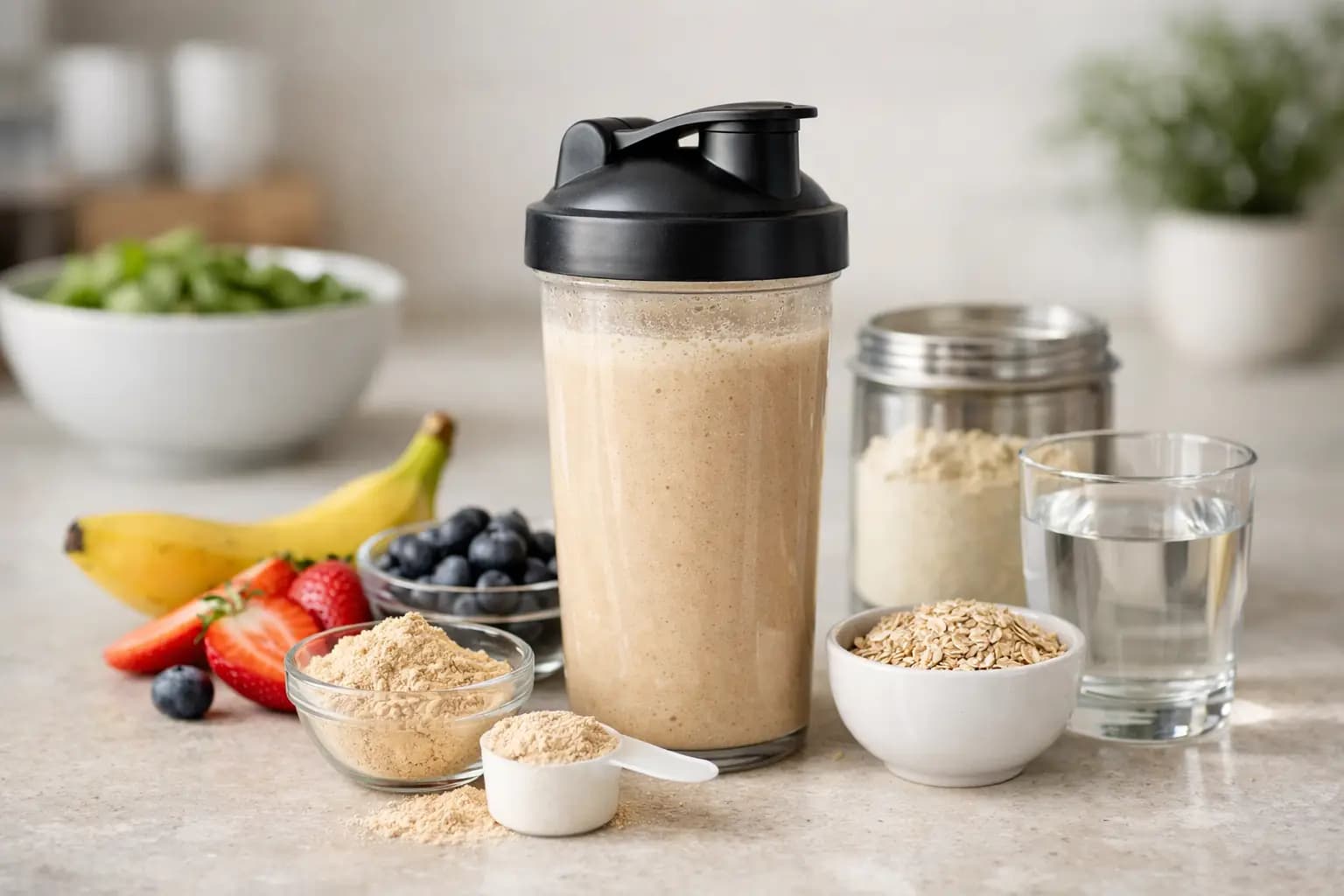
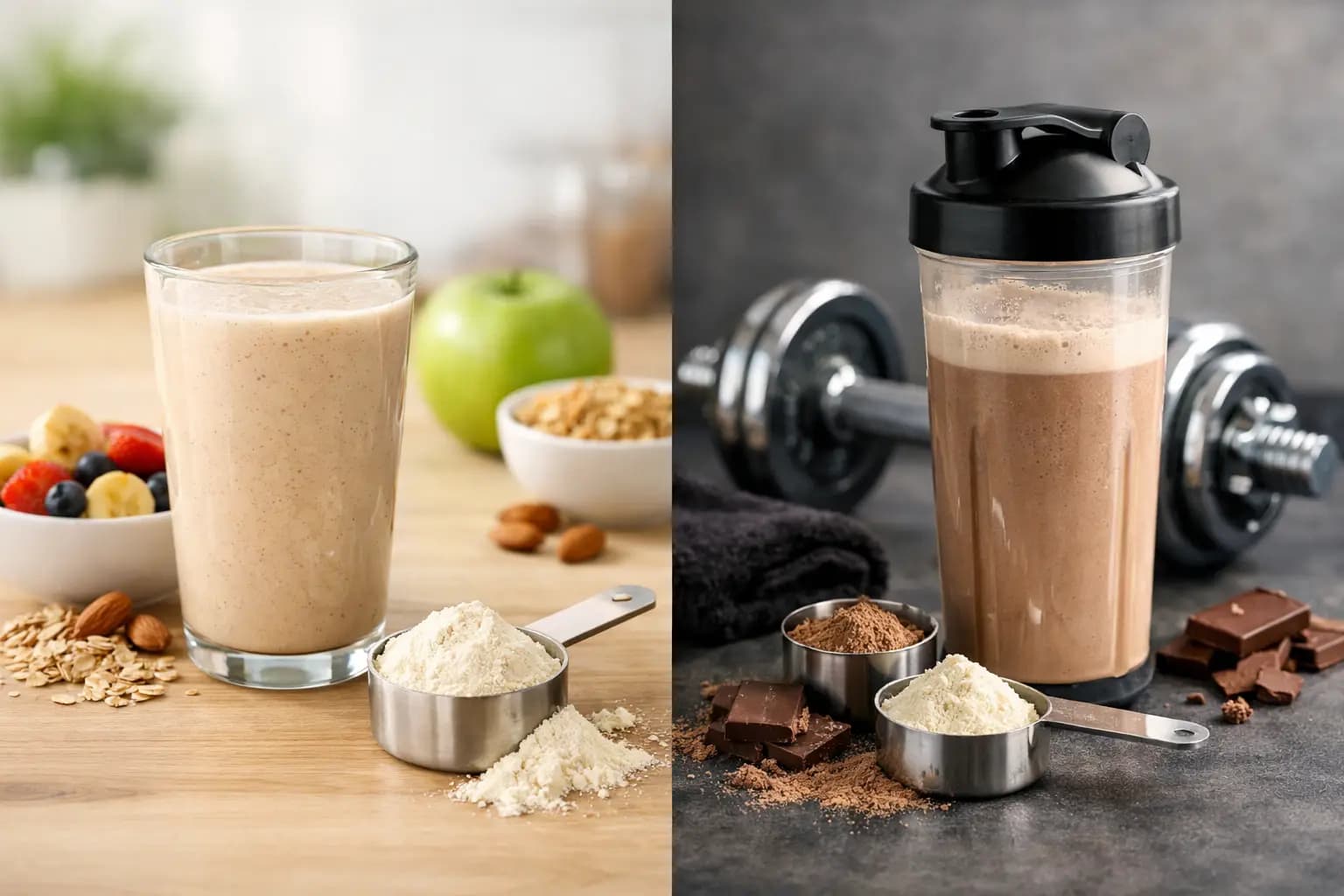
Standing in your kitchen with a shaker in one hand and a busy day ahead, it is easy to see why meal replacement shakes vs protein shakes causes so much confusion. They can look similar on the shelf, both promise convenience, and both can fit into a healthier routine. But they are not doing the same job, and choosing the right one can make your results feel much more consistent.
Protein shake vs meal replacement: a meal replacement shake is formulated to stand in for a whole meal, with protein, carbohydrates, fats, fibre, vitamins and minerals in a controlled portion. A protein shake tops up your protein alongside meals. Choose a meal replacement for structure and portion control, a protein shake for recovery and fullness.
If your goal is fat loss, better routine, improved recovery, or simply fewer skipped meals, the difference matters. One is designed to act more like a balanced meal. The other is mainly there to help you increase protein intake. That sounds simple, but where people get stuck is in the day-to-day reality of work, training, cravings, and trying to stay on track without overthinking every choice.
Meal replacement shakes vs protein shakes: the core difference
A meal replacement shake is built to provide a broader nutritional profile. It usually contains protein, carbohydrates, fats, fibre, plus added vitamins and minerals so it can stand in for a meal when you are short on time or trying to manage calories more closely. The aim is convenience without leaving you nutritionally short.
A protein shake is much narrower in purpose. It is mainly there to boost protein intake, whether that is after exercise, between meals, or during a busy day when your food choices are not ideal. It may contain some carbohydrates and fats, but that is not its main job. It is a supplement to your diet, not usually a replacement for a full meal.
That distinction changes how full you feel, how long the shake keeps you satisfied, and how useful it is for your specific target. If you replace lunch with a standard protein shake, you may find yourself hungry an hour later. If you use a meal replacement after training when what you really wanted was a lighter protein top-up, it may feel heavier than necessary.
When a meal replacement shake makes more sense
Meal replacements are often the better fit for people who are trying to create structure. If breakfast gets skipped, lunch turns into a meal deal, and dinner becomes a reward for surviving the day, a balanced shake can help tidy up the routine. It gives you something measured, quick, and easier to repeat.
For weight management, that consistency matters. A properly formulated meal replacement can help control portions while still giving you a useful mix of nutrients. That is one reason many people use them as part of a fat loss plan. You know roughly what you are having, you cut down guesswork, and you are less likely to grab whatever is nearest at 3 pm.
They also suit people who genuinely struggle to organise balanced meals during the working week. If you are commuting, juggling family life, or trying to keep calories in check without cooking every meal from scratch, a meal replacement can be a practical tool rather than a compromise.
That said, not every meal should come from a shaker. Whole foods still matter for satisfaction, variety, and long-term habits. Meal replacements tend to work best when they support your routine rather than replace normal eating altogether.
When a protein shake is the better option
Protein shakes are ideal when your meals are mostly fine but your protein intake is lagging behind. This is common with active adults, gym-goers, and anyone trying to support muscle maintenance while losing weight. Protein helps with fullness, recovery, and preserving lean mass, especially when calories are lower.
If you have already eaten breakfast and lunch but want something convenient after training, a protein shake is often the cleaner choice. It gives you targeted support without turning into another full meal. The same applies if you need a quick snack between meetings or want to stop yourself reaching for biscuits in the office.
Protein shakes can also help people who do not naturally eat much protein. If your day tends to revolve around toast, cereal, pasta, and quick convenience foods, a shake can help bring more balance without making your routine feel complicated.
The trade-off is that a protein shake on its own is not always very satisfying for long. If hunger control is your main issue, you may need to pair it with something else, or consider whether a meal replacement would actually suit that time of day better.
Which is better for weight loss?
This is where people usually want a straight answer, but it depends on what is getting in the way of your progress.
If the main problem is overeating at meals, inconsistent portions, or grabbing high-calorie convenience food when you are rushed, meal replacements can be very effective. They simplify decisions and make calorie control easier to stick to. For many beginners, that structure is exactly what helps momentum build.
If the main issue is hunger, snacking, or not eating enough protein while dieting, protein shakes can be useful too. Higher protein intake often makes a calorie deficit easier to manage, and it can support muscle retention while body fat comes down.
So which wins? Meal replacements often work better as a direct weight-management tool. Protein shakes often work better as support within a wider nutrition plan. They are not really rivals. They solve different problems.
Meal replacement shakes vs protein shakes for fitness goals
For fitness, protein shakes usually have the advantage. If your priority is gym recovery, muscle maintenance, or increasing daily protein without adding too much hassle, they are more targeted. You can use them around workouts, alongside meals, or as an easy protein boost on busy days.
Meal replacements can still help active people, especially if your bigger challenge is overall routine and not just recovery. Missing meals can leave energy low and lead to poorer food choices later. In that case, a balanced shake can help keep you fuelled and more consistent.
A lot comes down to whether you need a meal or a supplement. People often buy protein with the expectation that it will behave like a lunch. Then they wonder why they are starving by mid-afternoon. Others use meal replacements where a simple protein top-up would have done the job. Matching the product to the moment is what makes the difference.
How to choose the right one for your routine
Start with the question: what am I trying to fix?
If you need a convenient breakfast, a controlled lunch, or a more structured plan for fat loss, look towards a meal replacement. If you need extra protein after exercise, more support for recovery, or a better snack option than the usual vending machine choices, a protein shake is probably the smarter fit.
Then consider fullness. Meal replacements generally keep you satisfied longer because they are designed to be more balanced. Protein shakes can still help with appetite, but they are often lighter and faster-digesting.
Also think about how many times a day you realistically plan to use it. A meal replacement may make sense once or twice a day within a clear routine. A protein shake might slot in more flexibly depending on training, step count, and appetite.
This is also where product quality matters. A well-formulated shake with credible nutrition is very different from a sugary powder with good packaging. If you want results, the label should match the purpose.
A common mistake: using one as if it were the other
One of the biggest reasons people feel disappointed is simple mismatch. They buy a protein shake hoping it will replace breakfast and keep them full until lunch, or they choose a meal replacement after the gym when they really wanted a lighter recovery option.
Neither product is bad in that situation. It is just the wrong tool for the job.
That is why guided support can be so helpful, especially if you are new to wellness products. The best routine is not the most complicated one. It is the one you can repeat on busy weekdays, slow weekends, and those moments when motivation dips. For many customers, that means keeping things simple with a meal replacement for structure and a protein option for targeted support.
At HL Shop UK, that practical approach is exactly what many people are looking for - trusted products, fast delivery, strong value, and help choosing what actually fits their goal rather than what sounds good on the front of the tub.
So what should you buy?
If your day is chaotic, your meals are inconsistent, and you want an easier path to calorie control, start with a meal replacement. If your food is mostly on track but you need more protein for recovery, fullness, or better body composition support, choose a protein shake.
And if your goal includes both weight management and staying active, there is a good chance both can earn a place in your routine. One helps create structure. The other helps strengthen the plan.
If a meal replacement sounds like the right fit, our guide to the best meal replacement shakes UK takes a closer look at how to choose one.
Leaning the other way? Our guide to Herbalife protein powder looks at when a protein shake is the smarter pick.
The best choice is the one that makes healthy eating feel easier tomorrow, not just more ambitious today.
Food supplements are not a substitute for a varied, balanced diet and a healthy lifestyle.