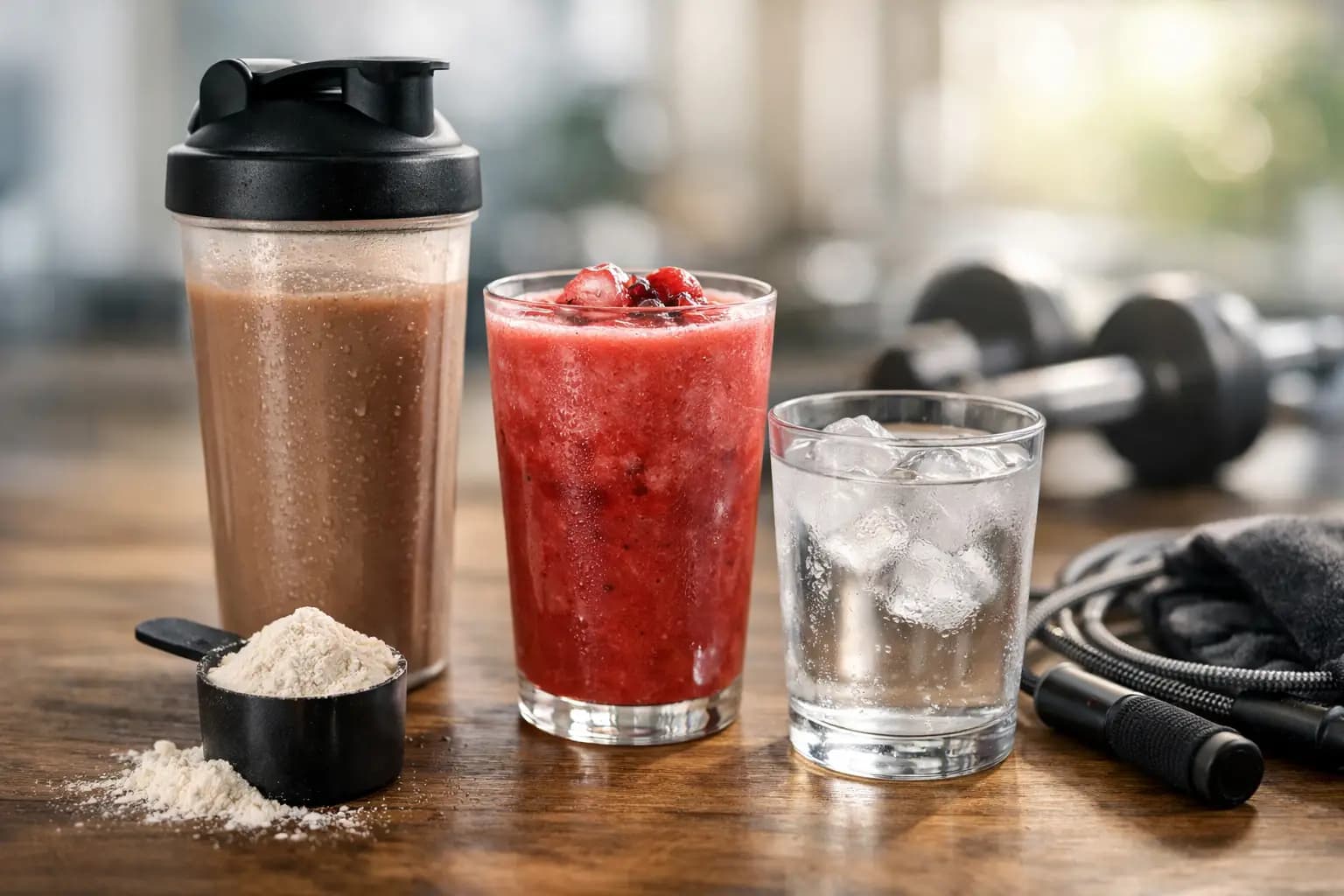
“What should I actually be drinking while I train?” comes up more often than any question about protein, and it usually arrives with a bit of embarrassment attached — as though everyone else got a memo about it. They did not. Walk into any gym in the country and you will see four people on four different plans: one with tap water in an old bottle, one with something bright orange, one with nothing at all, and one carrying two bottles and looking slightly smug. So rather than a rule, here is how I talk it through with people, starting with the part nobody wants to hear.
For most sessions, the answer is water
If you are doing forty-five minutes of weights, a spin class or a run round the park, water is very likely all you need during the session itself. That is not me being unhelpful — it is the honest starting point, and it is worth saying because the alternative is buying something for a problem you do not have. The real issue for most people is not what is in the bottle, it is that the bottle is empty, in the car, or still on the kitchen worktop. Fix that first. A bottle you like carrying gets carried, which is the entire reason I keep a few shakers and bottles on the shelf rather than treating them as an afterthought. Sort the container, and half the hydration conversation resolves itself.
When something more than water earns its place
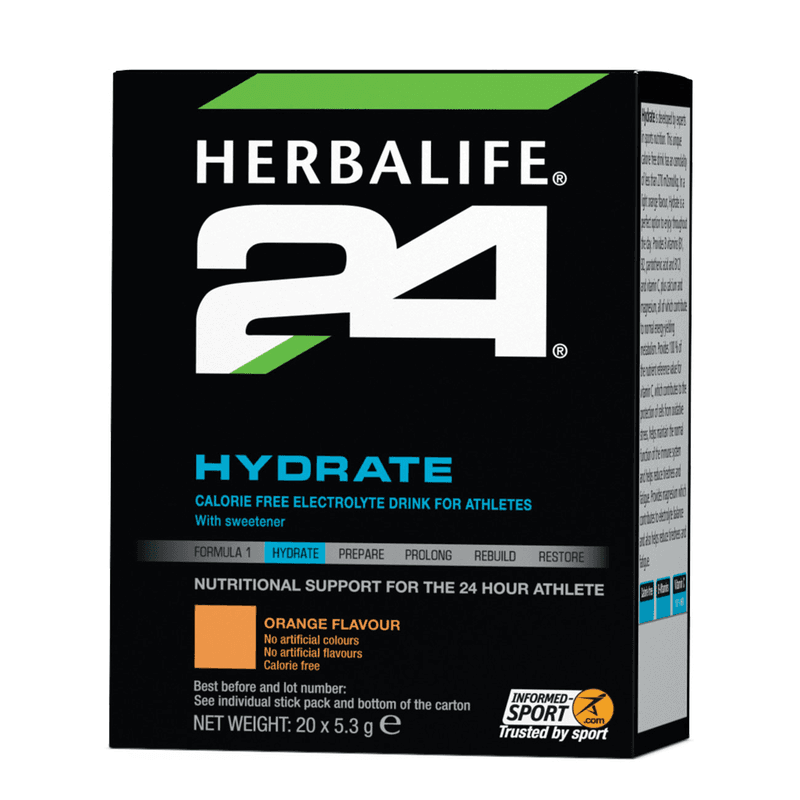
There is a point where plain water stops being the obvious choice, and it is less about how hard you are working than how long, how hot it is and how much you sweat. Long sessions, hot rooms, back-to-back classes, a heavy sweater in July — that is where an electrolyte drink starts to make sense, because you are replacing what is leaving rather than just topping up volume. Hydrate is the one I reach for here: a stick pack of orange that goes straight into the bottle, no measuring, nothing to carry home. If the session is genuinely long and you want carbohydrate alongside the fluid, CR7 Drive is the sachet designed for that job. The distinction is simple: electrolytes for what you are losing, carbohydrate for what you are burning through. Most people need the first occasionally and the second rarely.
What I would carry, session by session
- Short gym session, air-conditioned room. — Water. Fill the bottle before you leave the house, not at the gym tap when you are already three sets in.
- Long or hot session, or two in a day. — Water with an electrolyte stick. This is the situation Hydrate exists for, and the sachet format means you can keep one in the gym bag permanently rather than deciding each time.
- Endurance work over an hour. — Fluid plus carbohydrate, sipped throughout rather than gulped at the end. Practise it in training, never for the first time on an event day.
- Straight after, whatever the session. — This is where protein belongs, not during. Trying to drink a shake mid-workout is how people end up feeling heavy and blaming the product.
- The rest of the day. — Genuinely the bit that matters most, and the bit everyone skips. Turning up already short is not something you can drink your way out of in an hour.
Three things that quietly go wrong
- Treating during-workout drinks as the whole plan. — Hydration is a daily habit with a workout-shaped bump in it. If water is boring to you, make it less boring: a capful of concentrate turns a glass into something you will finish, which is exactly the argument I make in my piece on how and when to use Herbal Aloe.
- Buying the drink before the routine. — If you train twice a week for thirty minutes, a box of sachets will sit in the cupboard reproaching you. Start with what your training actually looks like now. I go through that order of priorities properly in sports nutrition for gym beginners.
- Following the label loosely. — Stronger is not better, and eyeballing a stick pack into half a bottle just makes it unpleasant to drink. Use the amount of water the label asks for.
None of this needs to be complicated. Get the bottle sorted, drink through the day, and add an electrolyte stick on the sessions where you finish visibly sweaty — that covers most people, most weeks, as part of a balanced diet and an active lifestyle. Food supplements are not a substitute for a varied, balanced diet and a healthy lifestyle. If you want to see what is worth keeping in the gym bag, have a look through the Energy and Fitness range, or message me and I will tell you honestly whether you need anything beyond water yet.