⭐FAST DELIVERY AND 24/7 ASSISTANCE⭐FREE SHIPPING ON PURCHASES OVER £ 69⭐

🎁UNBEATABLE DISCOUNTS ONLY AT OUR ONLINE STORE🎁

How to Choose Protein Snack Products

15 June 2026

How to Choose Protein Snack Products

You do not need a cupboard full of bars, crisps and sweet treats with protein claims on the front. You need the right product for the job. If you are wondering how to choose protein snack products, the quickest way is to stop looking at the marketing first and start with your goal, your routine and the nutrition panel.

A protein snack can be a smart tool between meals, after training or during a busy day when a proper meal is not practical. But not every option supports the same result. Some are better for appetite control, some are more useful for recovery, and some are simply convenient alternatives to standard snacks. Once you know what to look for, choosing becomes much easier and far less hit and miss.

How to choose protein snack products for your goal

The first question is simple. Why are you buying the snack in the first place? That sounds obvious, but it is where many people go wrong. They pick the flavour they fancy, then hope it fits their plan afterwards.

If your focus is weight management, the best protein snack is usually one that helps you feel satisfied without pushing calories too high. In that case, a bar or savoury snack with a sensible calorie total, decent protein and controlled sugar can be a better fit than a product that is basically a chocolate bar with added whey.

If your focus is gym performance or recovery, you may be happier with a higher-protein option even if the calories are a little higher. After training, convenience matters, but so does getting enough protein to support muscle repair. A very low-protein snack may still taste good, yet it will not do much for that specific purpose.

If your goal is simply to eat better during a busy week, then practicality may matter more than perfect numbers. A protein snack that lives in your work bag, car or desk drawer and stops you grabbing pastries at 4 pm can be a genuine win. The best choice is not always the most technical one. It is often the one you will actually use consistently.

Start with the protein, not the packaging

Front-of-pack claims are designed to sell. That does not make them dishonest, but it does mean you should check what sits behind the words. Terms like high protein or protein packed can sound impressive, yet the amount per serving may be lower than you expected.

As a rough guide, many people look for at least 10g of protein in a snack, and often 15g to 20g feels more worthwhile if the product is specifically being used to support fullness or recovery. Context matters, though. A smaller snack with 10g of protein may still be a good option if calories are modest and it fits neatly into your day.

It is also worth looking at serving size. Some products look strong on paper until you realise the numbers are based on a portion smaller than what most people would eat. If you would naturally eat two packs, judge the nutrition on two packs.

Protein quality matters, but not in an extreme way

You do not need to overcomplicate this, but it helps to know where the protein comes from. Dairy-based proteins such as whey and milk protein are popular because they are convenient and effective. Soy can also be useful, and mixed sources are common in snack products.

For most people, the bigger issue is not chasing a perfect protein source. It is making sure the snack contains enough protein to make a difference. If the product only offers a token amount, the source becomes less relevant because the overall impact is small.

Check sugar, calories and what else comes with it

A protein snack is still a snack product. That means some options are balanced and practical, while others are closer to confectionery with a protein angle. The label tells the real story.

Look at calories in relation to protein. If a product gives you 12g of protein but comes with a very high calorie total, it may still fit your plan, but you should choose it deliberately. The same goes for sugar. A little sugar is not automatically a problem, especially around training or within an otherwise balanced diet. Still, if you are using the snack for everyday appetite control, lower sugar and a steadier nutritional profile may suit you better.

Fat and fibre are worth checking too. Fibre can help with fullness, which is useful if you are trying to avoid grazing. Fat can improve taste and satisfaction, but a very high-fat snack may not be the best pick if you want something lighter. There is no single perfect formula. It depends on whether your priority is feeling full, keeping calories tighter or getting a quick and easy protein boost.

Think about when you will eat it

Timing changes what makes a product useful. A snack before a meeting, after the gym or during a long journey does not need to do exactly the same job.

For workdays and travel, shelf-stable convenience is key. Bars and portioned savoury snacks tend to work well because they are easy to carry and simple to control. If you are often caught out between meals, this kind of grab-and-go option can help you stick to your routine without much effort.

For post-workout use, many people prefer something easy to digest and straightforward to eat. A heavy, indulgent snack may feel less appealing than a lighter protein option. Again, this depends on preference, but it is sensible to match the product to the moment rather than buying everything for a vague future need.

For evenings, the challenge is often cravings rather than convenience. That is where taste matters more. If a protein snack helps you avoid raiding the biscuit tin, it is doing a practical job. Nutrition matters, but so does satisfaction.

How to compare protein bars, protein crisps and similar products

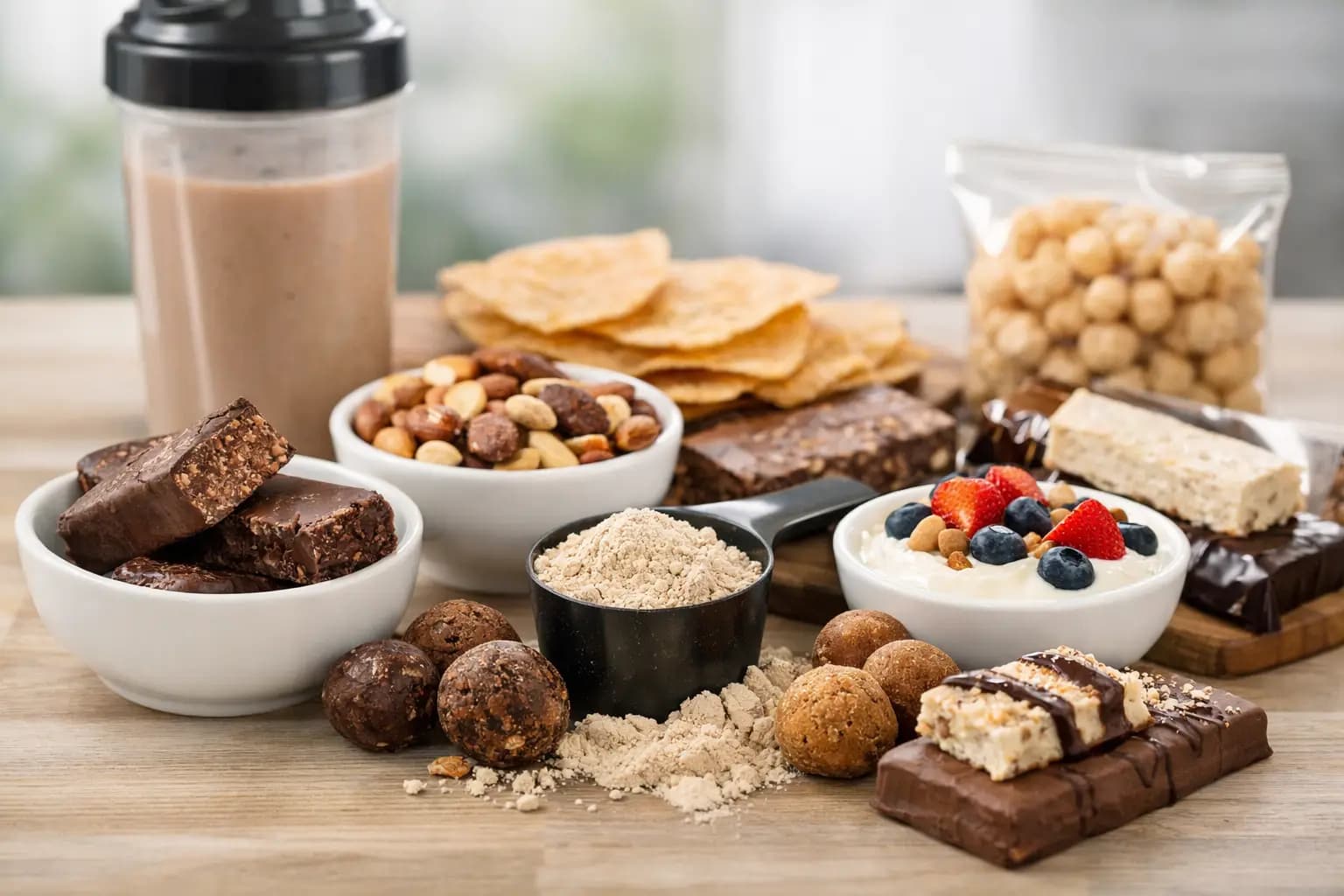
Not all protein snacks behave the same way. Protein bars are often the most filling and can feel closer to a mini meal, especially if they have a solid protein hit and some fibre. They can be useful for busy afternoons or when you need something substantial.

Protein crisps or chips are different. They are usually better for people who want a savoury option and miss the crunch of standard snacks. They may not always feel as filling as a bar, but they can make it easier to stay on track if your cravings lean salty rather than sweet.

Protein biscuits, wafers and sweet treats can be helpful for variety, but they are worth comparing carefully. Some are impressively balanced. Others are more of an occasional better-choice treat. There is room for both, as long as you are honest about what role they play in your plan.

Choose the format you will stick with

A snack only helps if it fits your real life. If you hate overly sweet bars, buying a box because it is on offer is not a bargain. If you prefer savoury snacks, work with that. If you need something that can live in your gym bag for days, choose convenience over fuss.

This is one reason many customers do better when they build around a small routine rather than random purchases. One option for work, one for after training, and one for cravings can be more effective than buying five products that all do the same thing badly.

Watch out for common buying mistakes

The biggest mistake is assuming all protein snacks are automatically healthy. Protein is useful, but it does not cancel out everything else on the label. Another common mistake is buying according to trend instead of need. A popular snack may be great for someone training hard five days a week and completely unnecessary for someone who simply wants better control between lunch and dinner.

People also tend to ignore taste until after they buy in bulk. That rarely ends well. If you are trying a new format or flavour, it makes sense to start small. Consistency beats enthusiasm every time.

Price matters too. The cheapest option is not always the best value if the nutrition is weak or the taste is poor. On the other hand, the most expensive product is not automatically superior. Look at cost alongside protein content, convenience and whether it genuinely helps you stay on plan. That is real value.

A simple way to make the right choice

If you want a practical method for how to choose protein snack products, use this quick filter. First, decide the job the snack needs to do. Second, check the protein per serving and compare it with the calories. Third, look at sugar and fibre. Fourth, ask yourself whether you would happily eat it more than once.

That final point matters more than many people realise. The best nutrition numbers in the world will not help if the product sits untouched in your kitchen. A strong routine comes from realistic choices you can repeat during busy weeks, not from chasing perfection.

At HL Shop UK, that is exactly how many people find the right fit - by choosing products that match their goals, their tastes and their schedule rather than buying on hype alone. A protein snack should make your plan easier to follow, not harder to understand.

Choose with purpose, keep it simple, and let your snacks support your routine instead of testing it.

Shop genuine Herbalife products

Browse Best Sellers

Keep reading

Free UK Shipping over £69

30 Days Money Back Guarantee

Secure Payments

Comprehensive Free Assistance